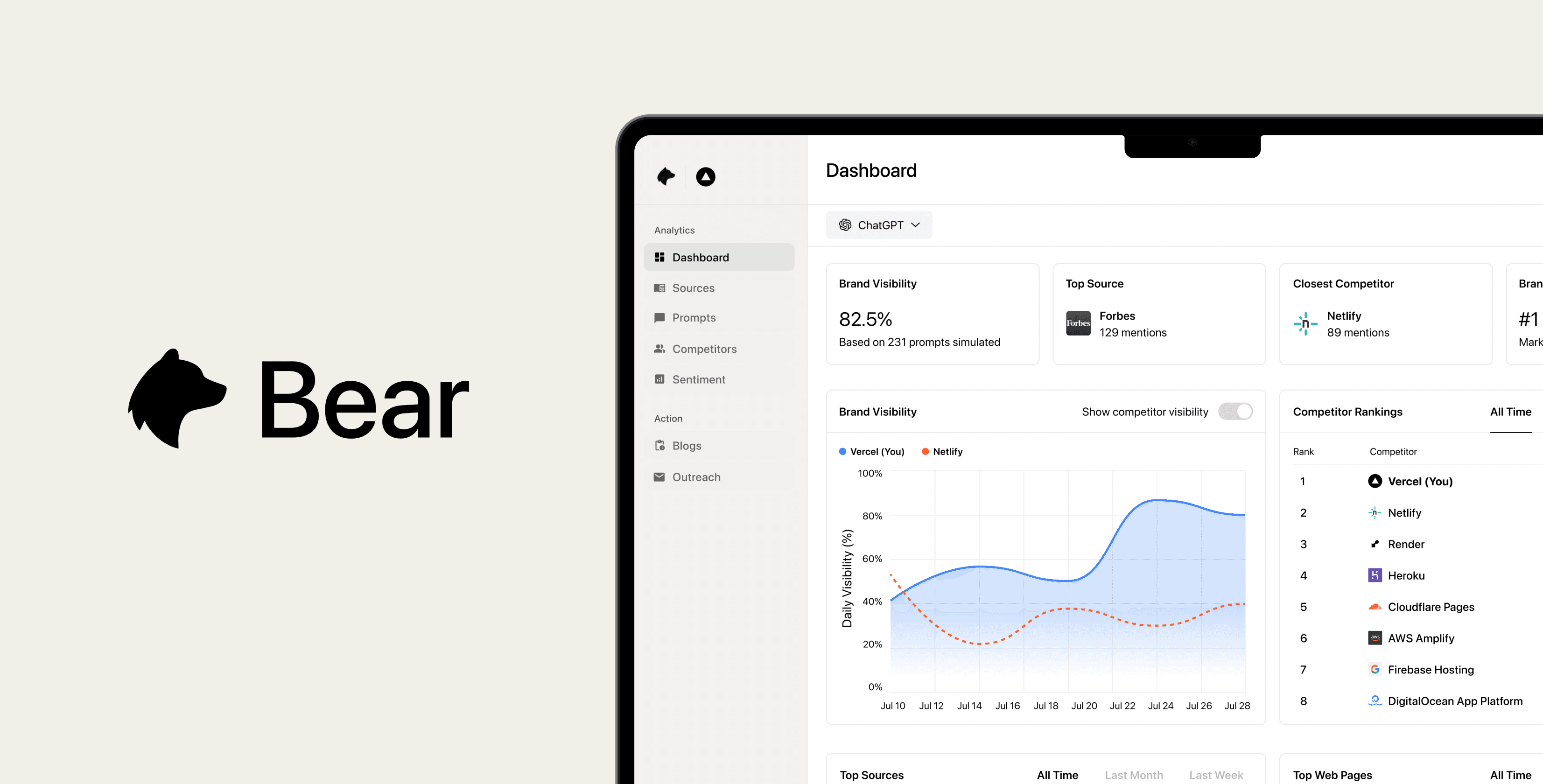
Bear (YC F25)
Team
Janak Sunil (CEO)
Siddhant Paliwal (CTO)
Ved Vedere (Growth)
Role
Designer
Timeframe
June 2025 - January 2026
At Bear, I was a solo designer working across product, marketing, and growth at a Y-Combinator backed startup building in one of the fastest-moving spaces in tech. I contributed to growing Bear from $1K to $60K MRR with 50+ clients, through a $1.2M pre-seed and $3.2M seed round at a $40M valuation.


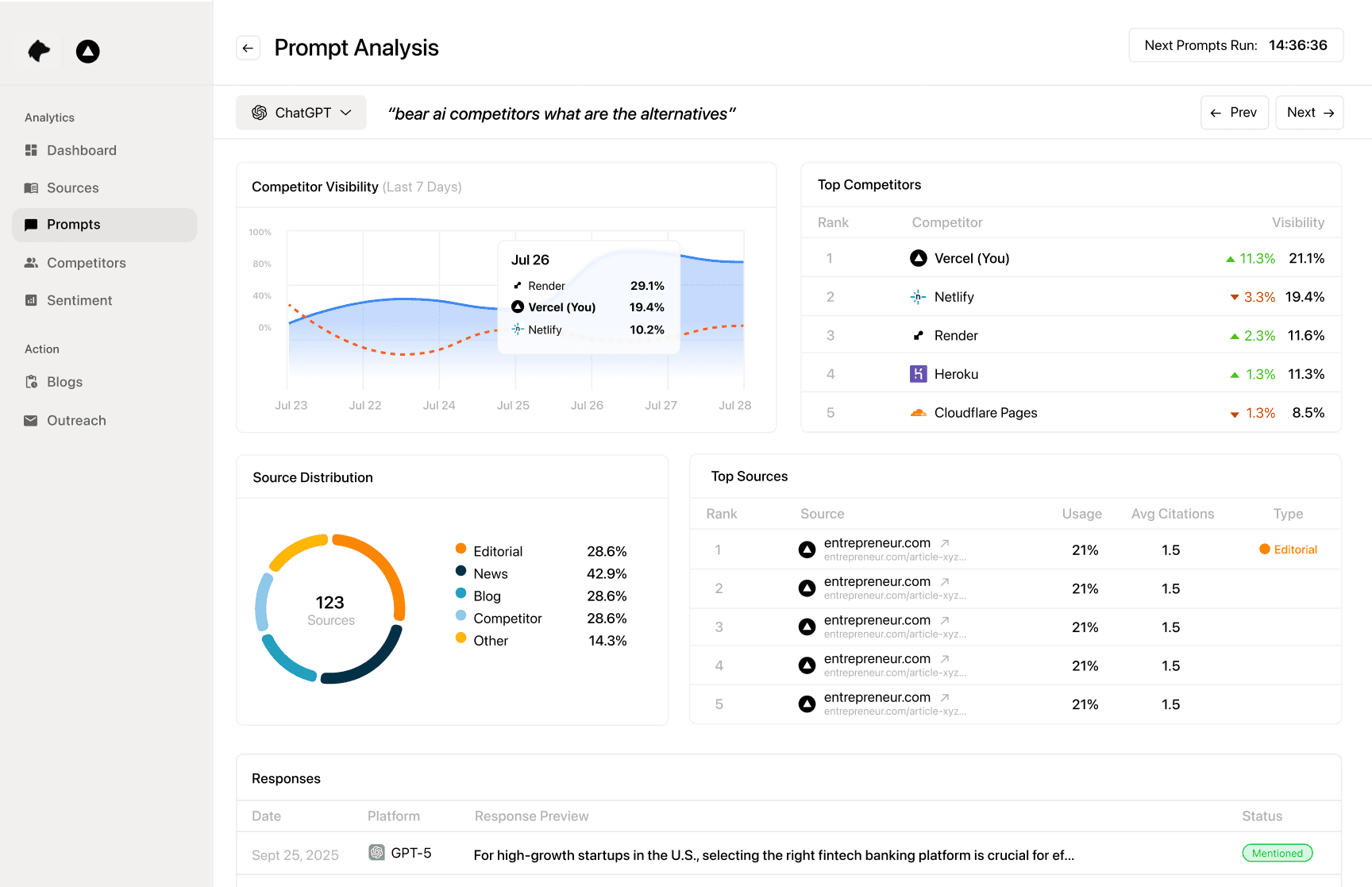

Product Snapshot
What is GEO?
Search Changed and Nobody Told the Marketers
As more people turn to AI search like ChatGPT, Google AI Overviews and Perplexity for answers, the rules of marketing are changing. Unlike traditional search which returns a list of blue links, AI gives a single confident answer. If you're not in the answer, you don't exist to that user.
The $90B SEO industry is being replaced by Generative Engine Optimization (GEO), the practice of optimizing your online presence so that AI models learn to trust, cite, and recommend you. Bear is the platform helping companies do exactly that.
What does Bear do?
Bear with Us
Bear helps companies show up on AI search by giving marketing teams visibility into how AI models are talking about their brand. Bear tracks which prompts surface their company and analyze which sources AI cites. Bear also provides tools to generate AI-ready content, automate PR outreach, and convert AI-driven traffic into leads.
When I joined Bear, most marketers had never heard of GEO. They had no visibility into whether AI was mentioning their brand, no data to act on, and no framework for even thinking about it. Because of this, my time at Bear was guided by this one question:
How do you make an entirely new concept feel understandable and actionable to people encountering it for the first time?
I created Bear's launch video entirely using AI creative tools as part of my ongoing exploration of generative AI. It's an area I'm actively building on through my own creative studio TSUKI alongside client work.
Problem
How Much Metric is Too Much Metric?
The first version of Bear's product designed by the founders did what a lot of early B2B tools do: it showed everything. Every metric, all at once, across a cluttered navigation that made it hard to find anything quickly.
When we started reviewing session recordings with real customers, the problem became obvious. New users would land on the dashboard and stall. They didn't know where to look or what to do.
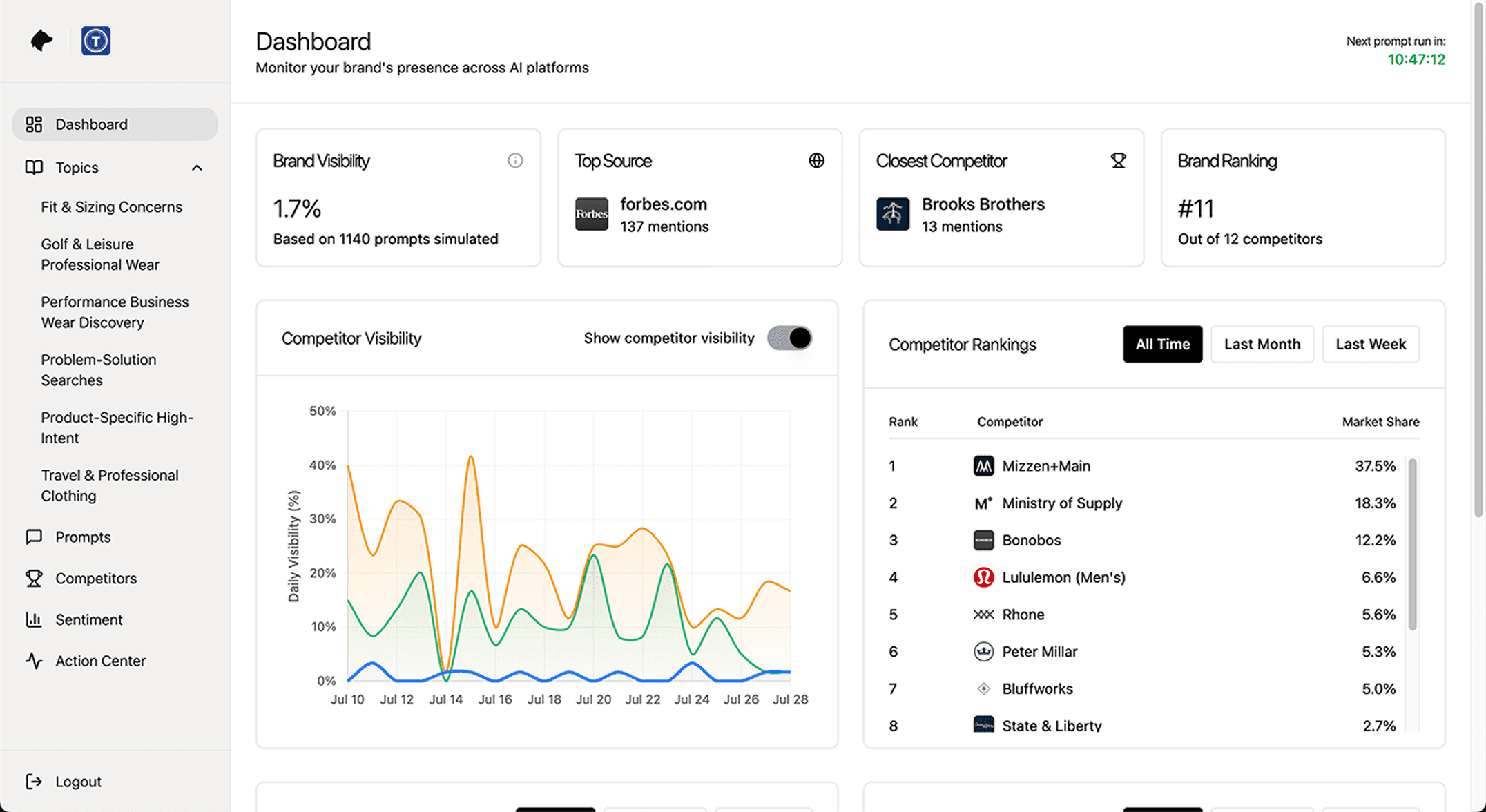
Dashboard (Before)
The prompt tracking page had the same problem of too much raw data and not enough signal. Prompts were categorized by topic in rigid buckets, and the headline metric was volume. Users had no mental model for AI citations yet, so a list of prompts with volume counts just read as noise.
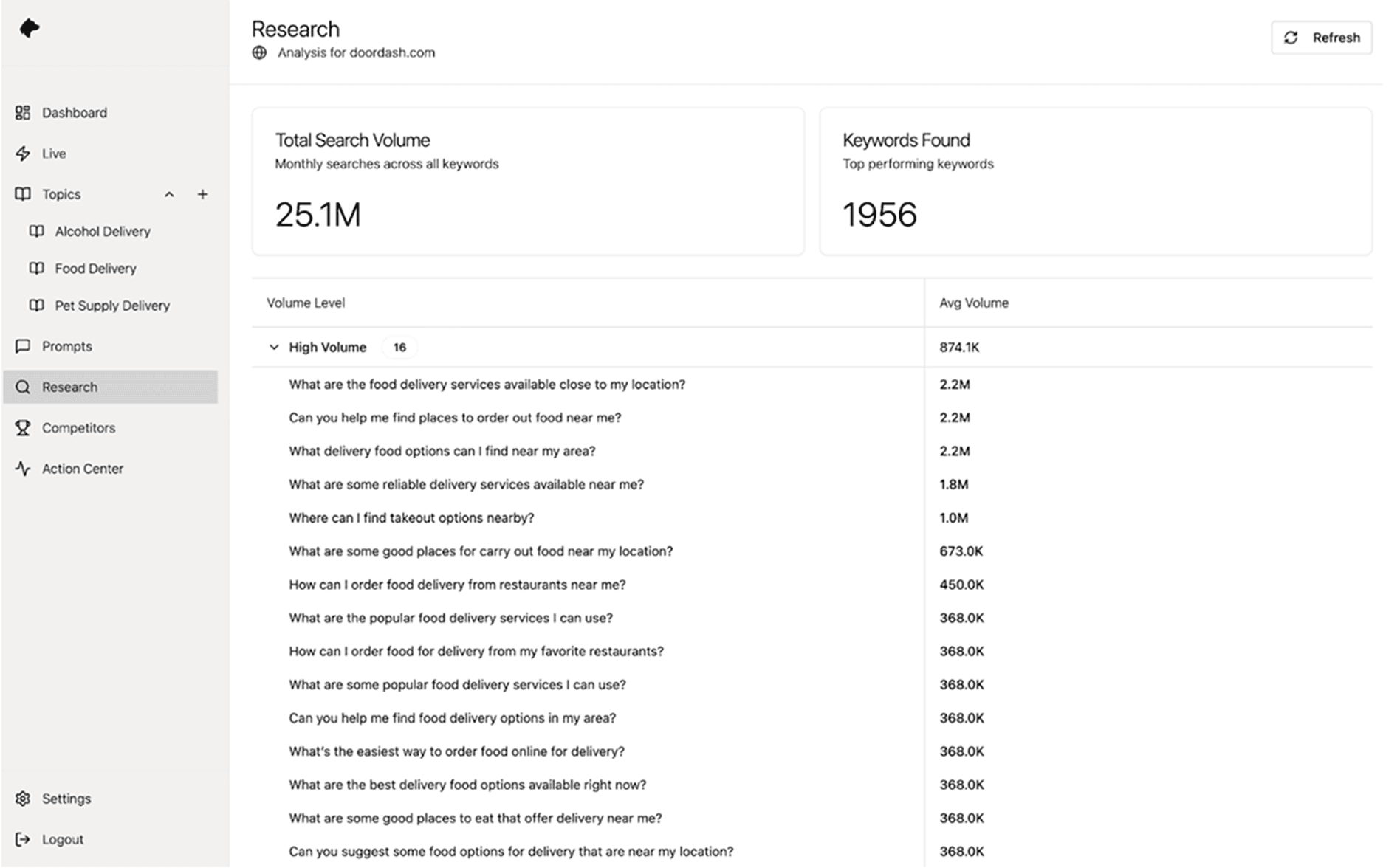
Prompt analysis (Before)
Solution
Only the Metrics That Matter
The core issue was that we were designing around what we thought users would care about, not what they actually needed to know first. After working through session recordings and direct client feedback, I redesigned around a single guiding question:
What does someone need to understand in the first 60 seconds?
For a new user, that meant one thing: Is AI mentioning my brand, and is that improving over time? Everything else was secondary.
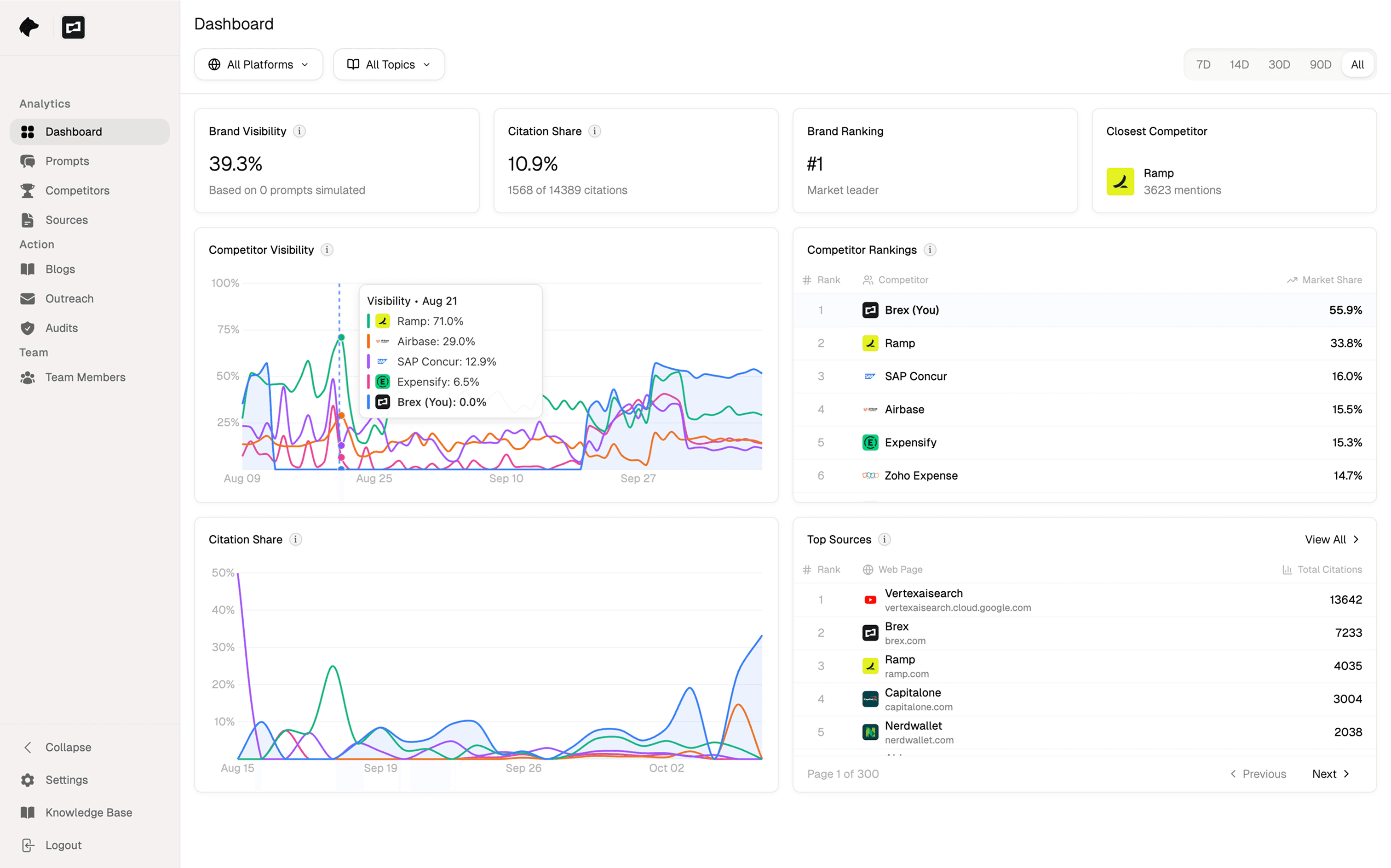
Dashboard (After)
The redesigned prompt table replaced topic categories with a flexible tag system for easier filtering, swapped raw volume for a visibility percentage per prompt, and added a competitor snapshot directly in the row so marketers could see who else was showing up for the same query.
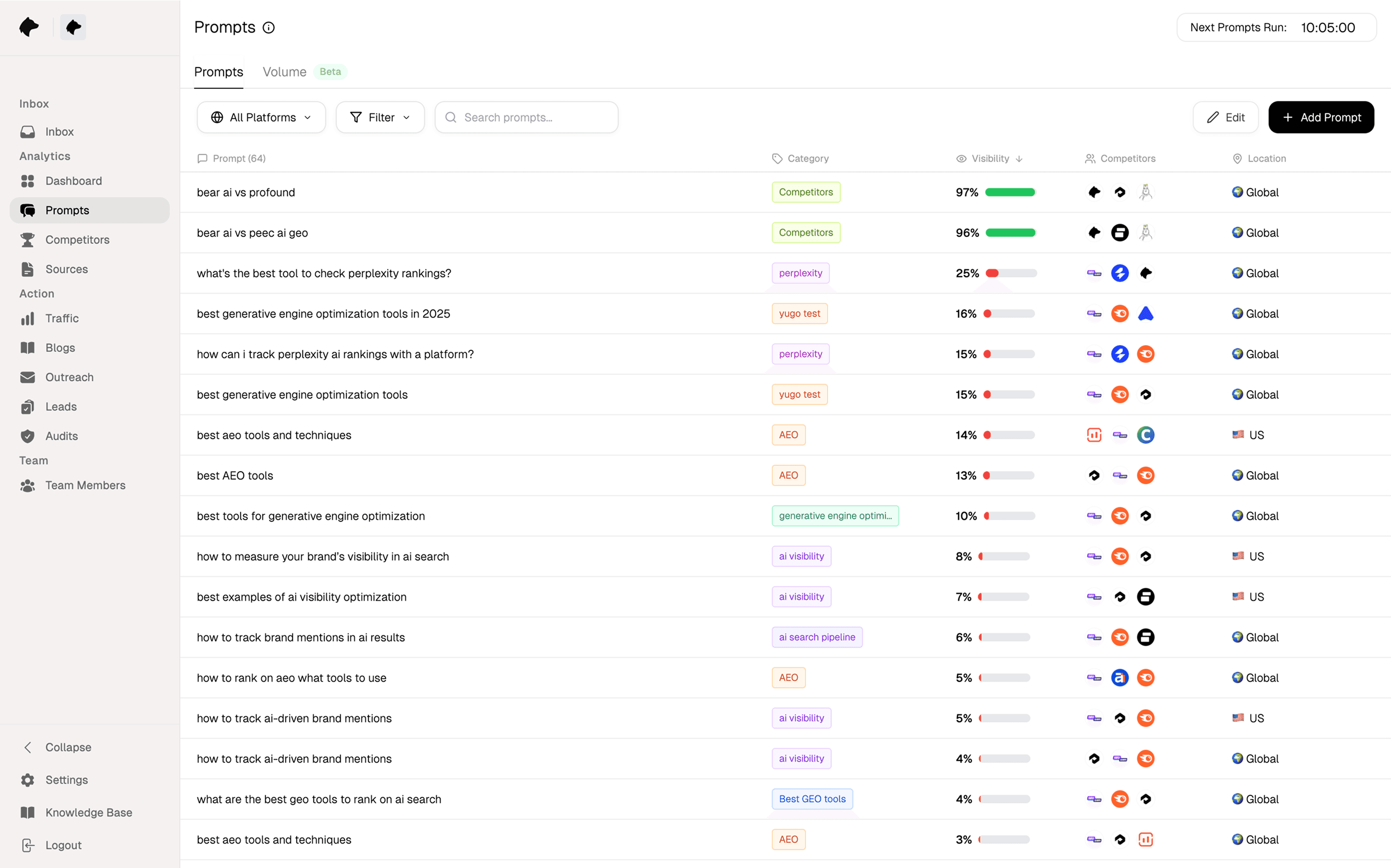
Prompt analysis (After)
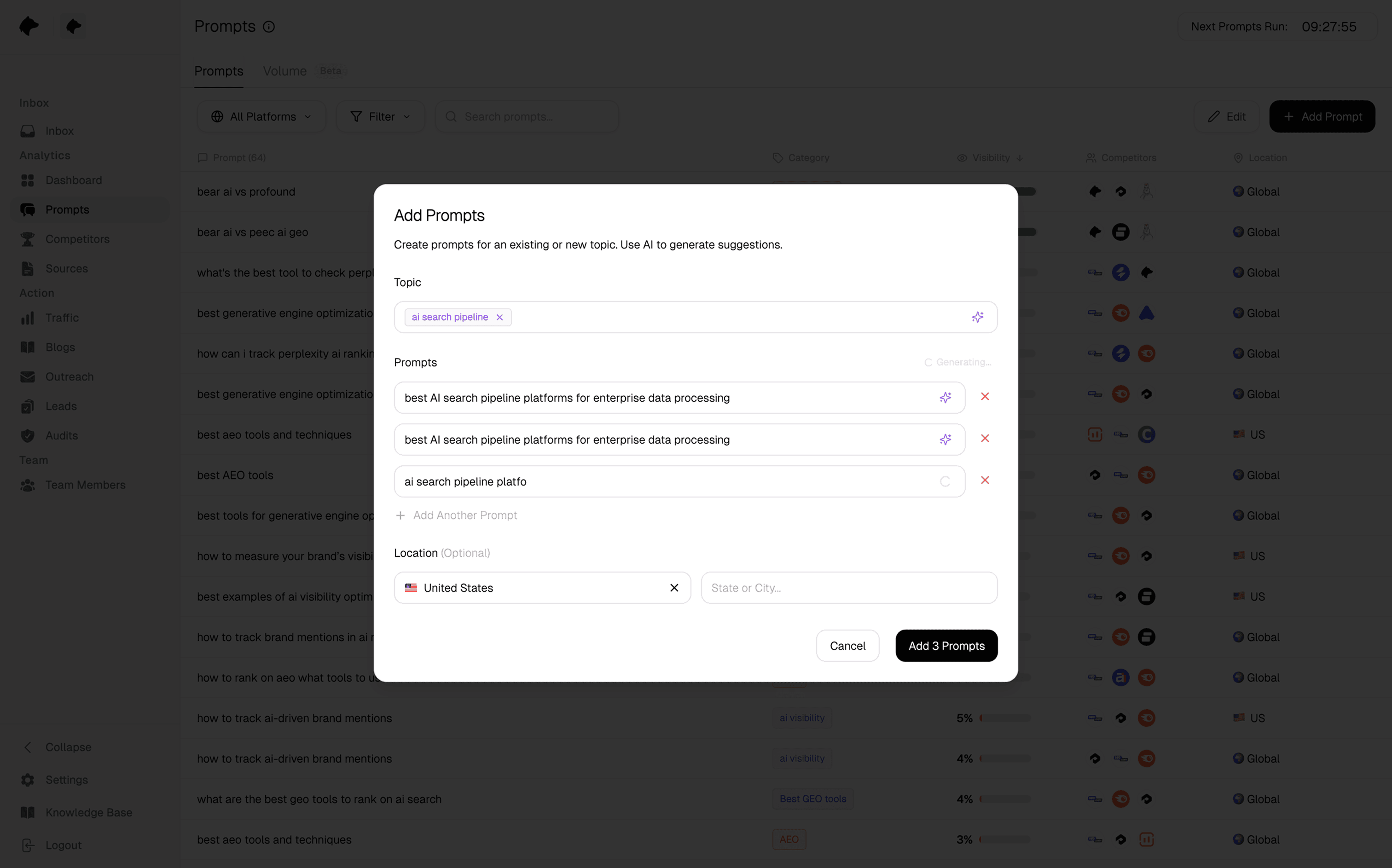
Adding prompts to track (After)
The sources analysis was reframed around intent and source type. Instead of a raw data table, it became a prioritized list of the sources AI trusted most, with outreach built directly into the view.
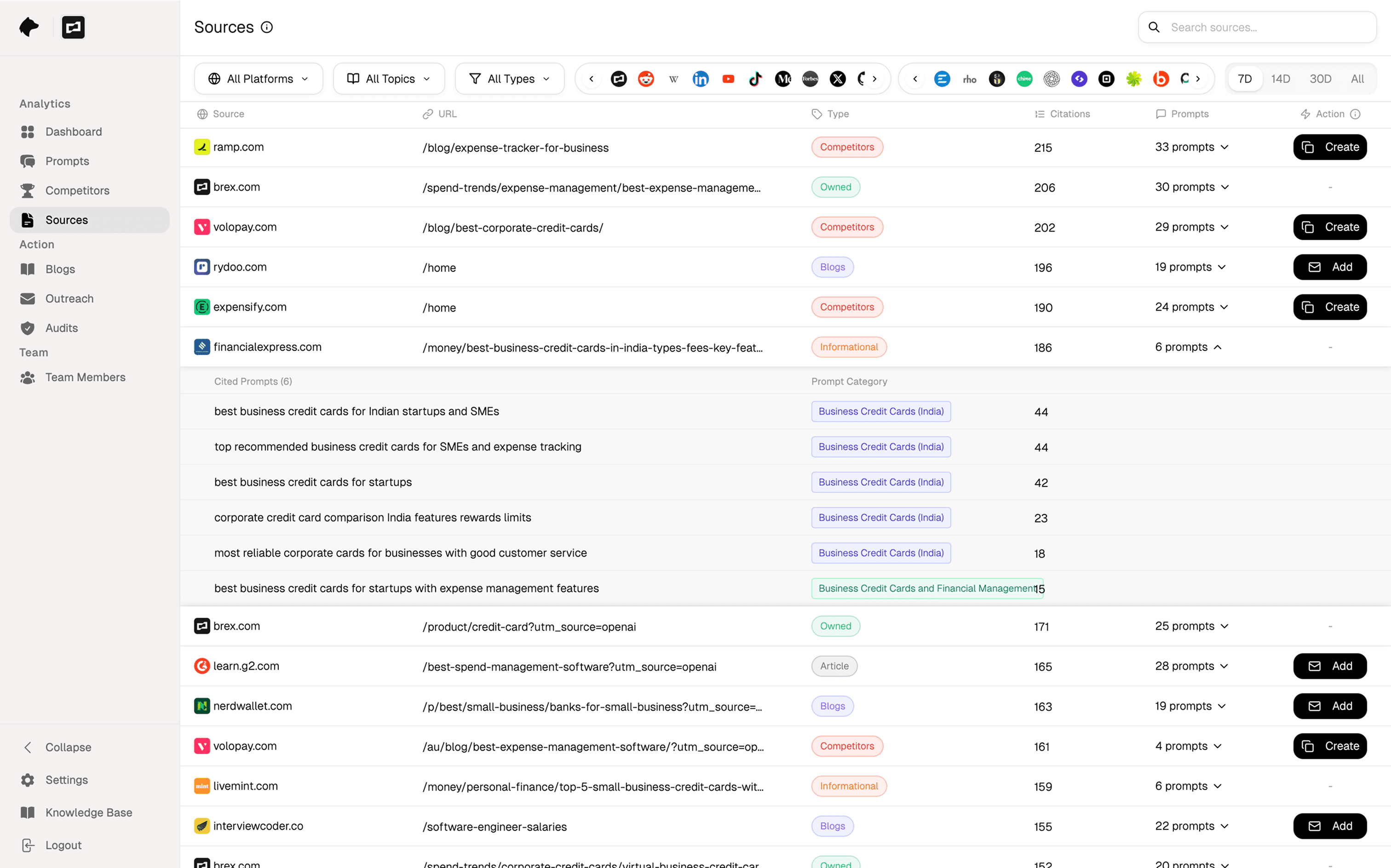
Sources Analysis
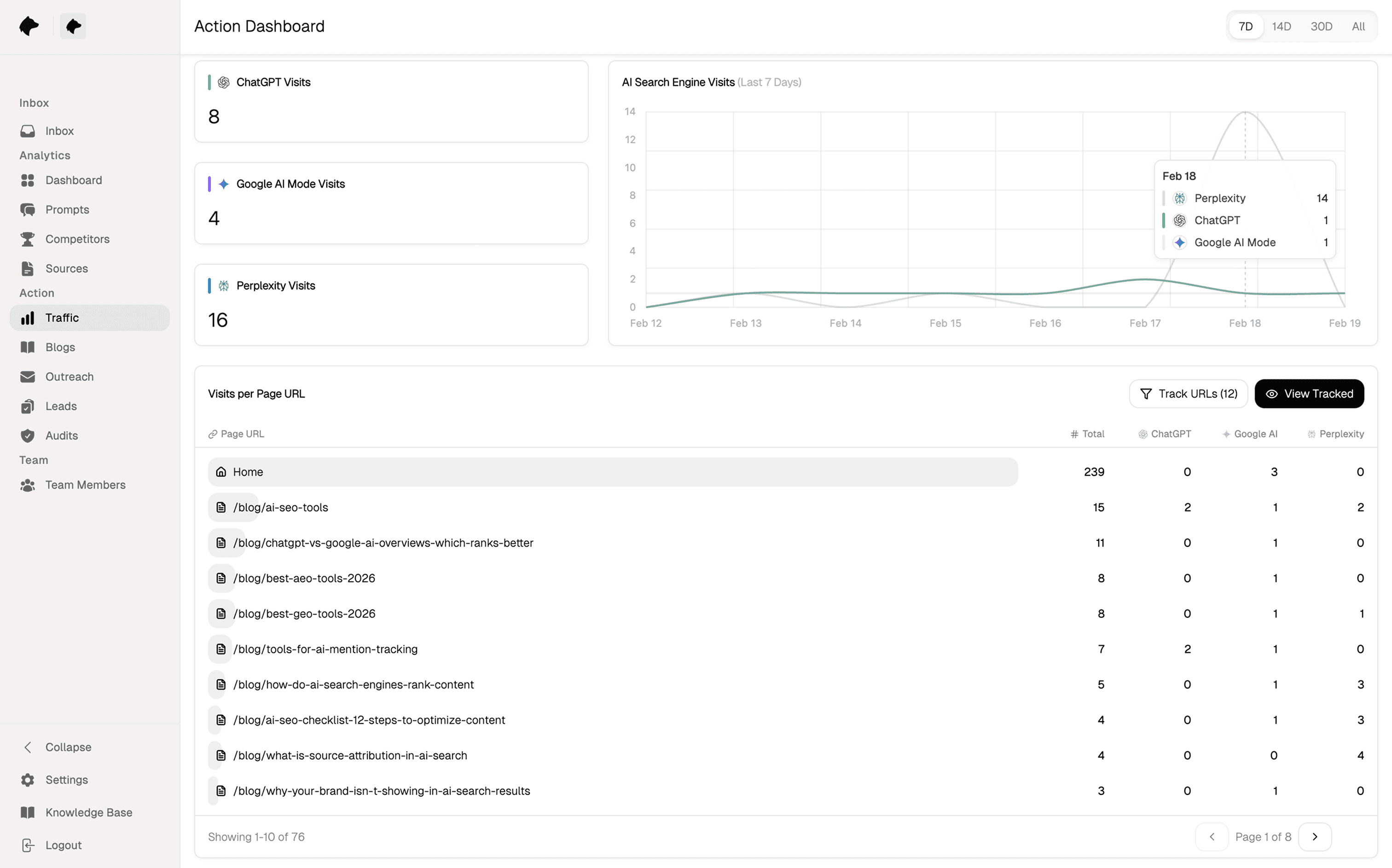
Action Dashboard
Website Redesign & Launch
Redesigning the Front Door
The original website increasingly became too narrow as Bear expanded from pure GEO into a broader "marketing stack for AI agents" covering analytics, content, PR, and lead generation.
As the GEO space became more competitive, standing out also meant having a distinct identity. Our primary clients were marketing teams, and most of our competitors leaned into the cold, technical aesthetic common in AI tooling.
To build a brand that felt approachable and human for a non-technical audience, I developed a new visual language using paintings as a central motif. Rather than the futuristic look typical of AI companies, the aesthetic was warmer and more friendly giving Bear a distinct presence in a sea of look-alike AI tools and made the product feel less intimidating to the marketers we were trying to reach.

Bear Landing Page (visit)
The redesign was structured the page around Bear's four pillars, each with product UI to ground the claim. The visual language was tightened to feel more credible at the fundraising stage: cleaner, more confident, with social proof and a clear call to action.
The redesigned site pulled over 30,000 visits in a month and supported Bear's successful raise of a $3.2M seed round at a $40M valuation.
Miscellaneous
Other 50% of Work
At an early-stage startup, my work didn't just end at product design.
I wrote blog content to help establish Bear's voice in the GEO space (read here), created pitch decks for fundraising and sales, and did sales calls and outreach alongside the team to understand what clients actually needed, which fed directly back into product decisions.
I also built a generative AI workflow to produce custom cover visuals for blog posts at scale, something that would have taken hours per post now ran in minutes.
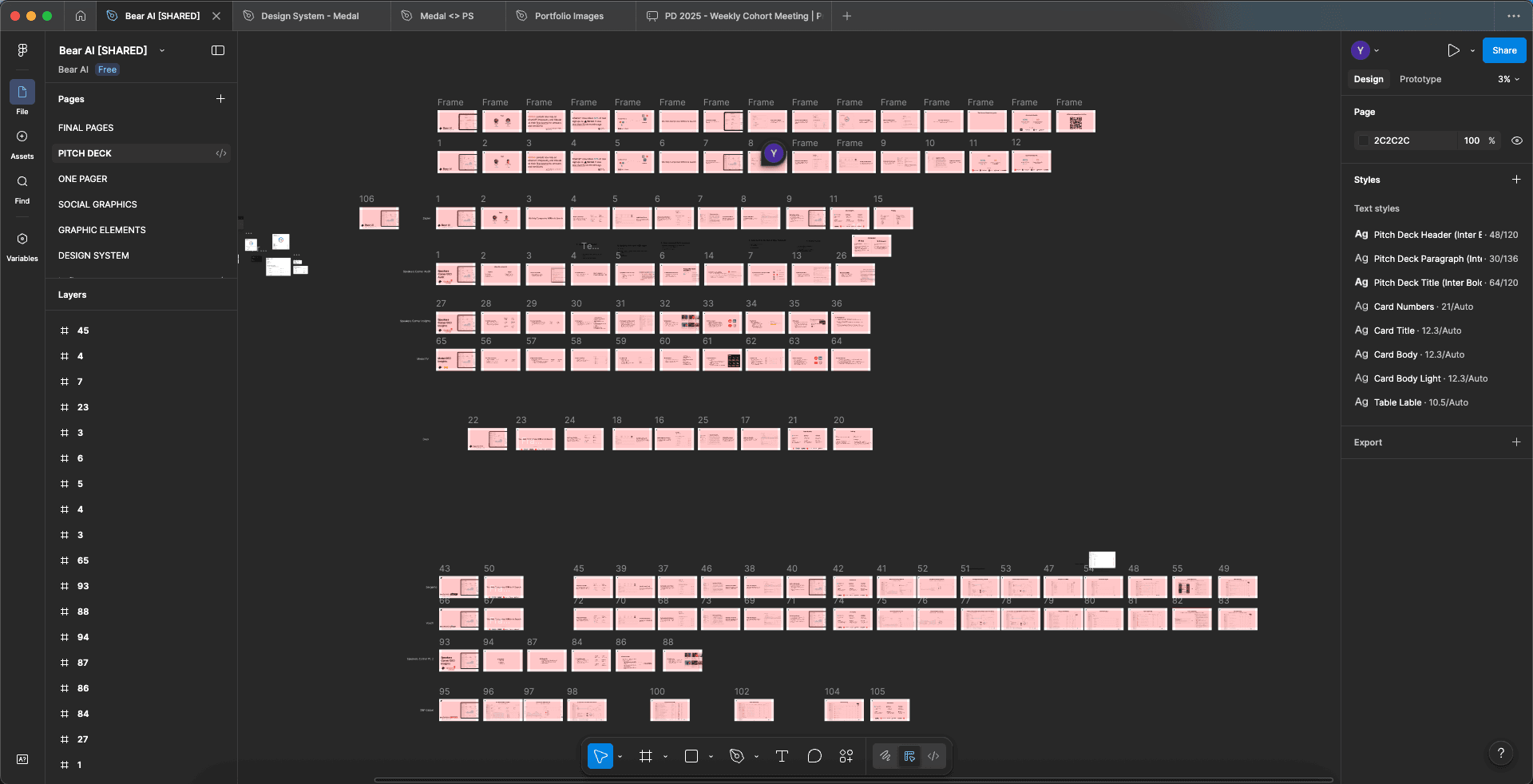
Pitch Deck and Meta Ads
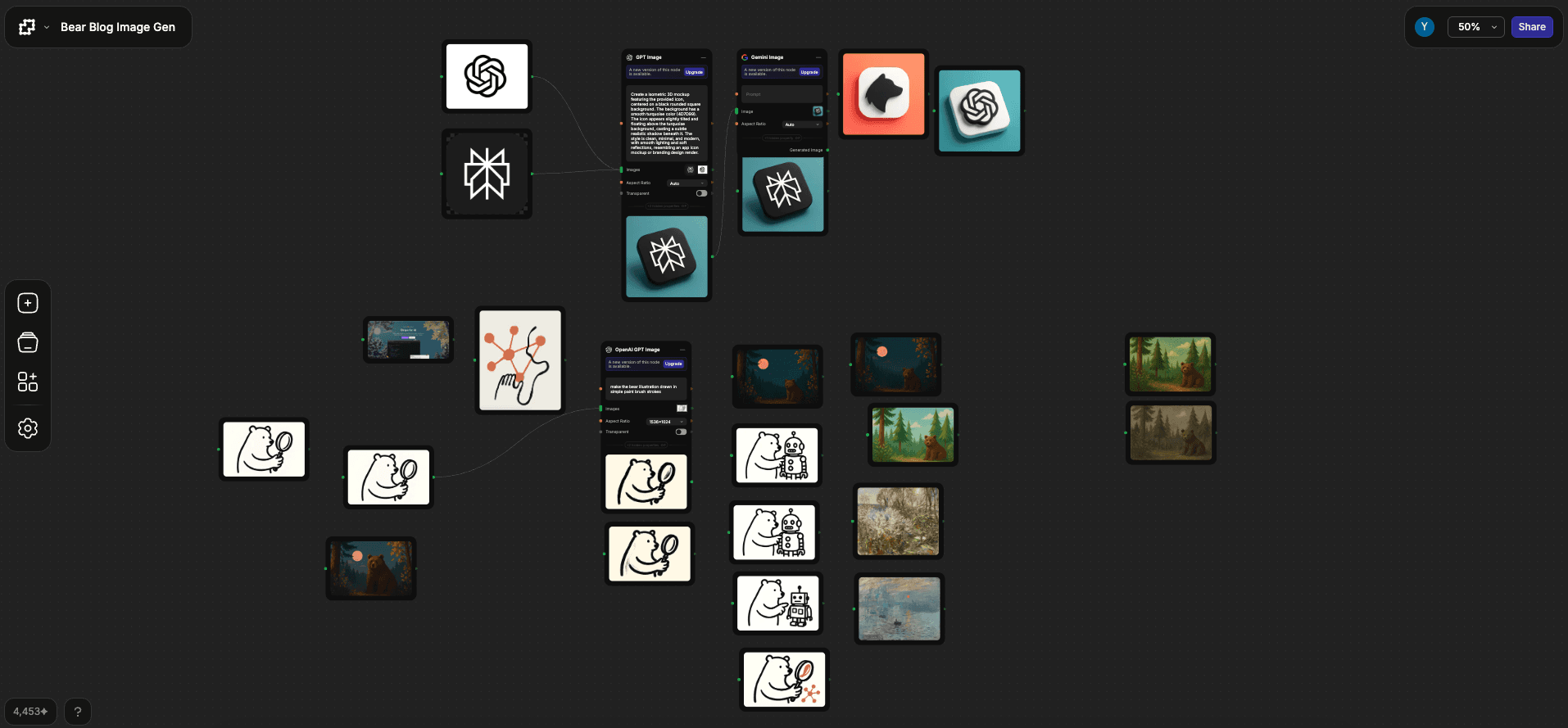
AI Graphic Workflow (Fuser, Midjourney, Kling, etc)
This kind of range isn't for everyone. But for a startup growing fast in a brand-new category, having a designer who could move fluidly between product, brand, content, and growth without needing a handoff was the point.
Miscellaneous
Toolkit
In a early stage startup, the product needed to move fast. Instead of waiting for our CTO to implement my designs, I built it myself using Figma to design and Cursor paired with Claude Code to implement. I took features from mockup to production myself, closing the gap between design intent and shipped reality.
Figma
UI flows, component libraries, and visual assets across product and marketing.


Cursor + Claude Code Implemented front-end features directly into production without engineering handoff.


Midjourney + Nano Banana
Generative workflow for custom blog visuals at scale, cutting hours down to minutes.
Conclusion
Lessons Learned
Data isn't clarity:
Showing users everything isn't the same as showing them what matters. The most impactful design work I did at was cutting, reordering, and reframing until the product answered the question a user actually had when they opened it.
Designing in a new category means earning understanding first:
GEO didn't have established conventions. Users couldn't reference prior experience to make sense of what they were seeing. That meant every screen had to build the mental model that made the data legible. Good UX in a new market is half product design, half education.
AI won't replace you, but somebody using AI will:
From the blog cover workflow to the launch video, AI tools let me produce work that would have required a full team. The skill isn't in the tools but rather it's knowing what quality looks like, and being able to direct and edit toward it. That's still design.
Next Project
TeamLab